In New York City, usually not. The curb belongs to the city, and the Department of Transportation is the agency that maintains it. Your responsibility ends where the sidewalk begins. There are a few catches, though, and some of them can still cost you money.
Who Owns the Curb in NYC?
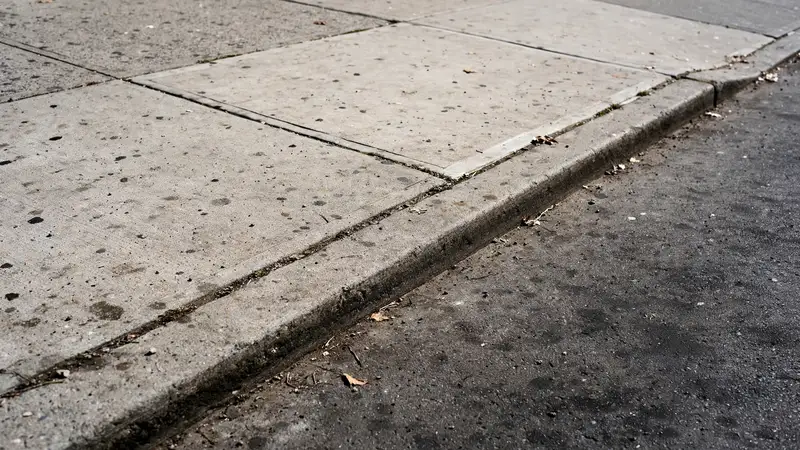
Sidewalks, curbs, and roadways are all city property. What changed over the years is who has to keep the sidewalk in shape. The city code defines a sidewalk as the paved strip between the curb line and your property line, and that definition leaves the curb out. Courts have leaned on that wording. In one Brooklyn small claims case, the judge noted that owners must maintain the sidewalk but not the curb, because the city owns it and is the one responsible for fixing it.
NYC DOT says as much in its own testimony to the City Council. The agency describes its job as maintaining roadways, curbs, and pedestrian ramps across 6,300 miles of streets and highways, while also overseeing 12,000 miles of sidewalk.
Where Your Responsibility Actually Starts
The Sidewalk Is on You
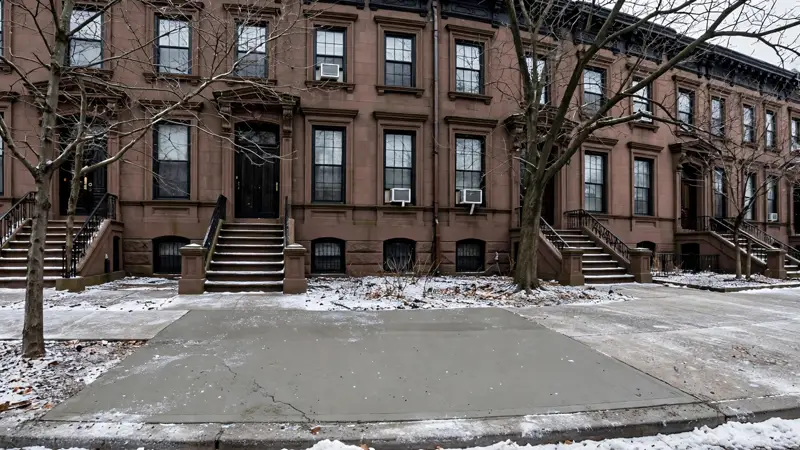
Under Section 19-152 of the Administrative Code, property owners must install, repair, and maintain the sidewalk next to their property. That includes clearing snow, ice, and debris. Section 7-210 adds another layer, since owners can be held liable for injuries caused by a defective sidewalk.
What Happens if You Ignore a Violation
When a DOT inspector finds a defect, you get a Notice of Sidewalk Violation. There is no fine attached, and you have 75 days from receiving it to make repairs. A copy of the notice is filed with the County Clerk, which can make selling or refinancing harder until the violation is cleared.
If you let the deadline pass, the city can do the work and the Department of Finance sends you the bill. You get 90 days to pay before interest kicks in and a monetary lien is placed on the property. A payment plan is available through Finance or 311. DOT estimates the cost by multiplying the square footage on your inspection report by a per-square-foot concrete rate, so you can work out a rough number before the crew shows up.
One exception is worth knowing. NYC does not charge owners of one, two, or three family homes when the damage comes only from city street trees. Those complaints go to NYC Parks instead.
When a Curb Problem Can Still Land on You
Curbs and Sidewalks Are Connected
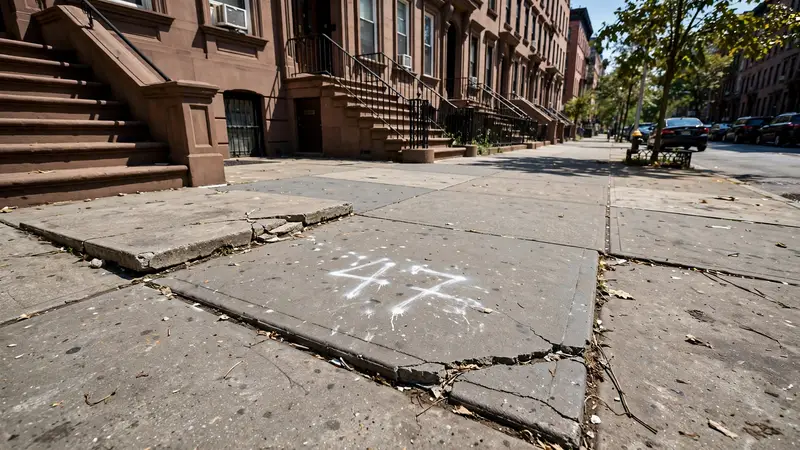
Here is where it gets tricky. A crumbling curb rarely stays a curb problem. When it breaks down, the neighboring sidewalk slab often follows. Assemblyman David Weprin has pointed out that broken curbs left unrepaired for too long can leave homeowners paying for new sidewalk work.
DOT also notes that fixing a curb means fixing the first flag of the sidewalk too. On its sidewalk page, the agency says owners are encouraged to repair or replace missing or defective curbs. It adds that DOT may handle curb work at no cost when it is already doing sidewalk work tied to a violation, or when an active Curb Repair Contract is underway. That is a "may," not a promise, so do not count on it.
Painted Curbs and Illegal Curb Cuts
This is the one situation where the curb really is your headache. If someone paints a curb to keep cars from parking in front of a driveway or garage, DOT can issue a Notice of Defacement, and you will be expected to restore the area to its original condition. Illegal curb cuts are handled by the Department of Buildings, and both the contractor and the homeowner who hired them can face violations, court appearances, and fines. Curb cuts are only allowed for authorized driveways, garages, and similar access points, and unauthorized ones can bring encroachment violations.
Damage Caused by Someone Else
If a utility company or contractor damaged your curb or sidewalk, document it right away and contact the company responsible. DOT lets you search street permits by address on nycstreets.net to figure out who was digging nearby. If a city agency or city contractor caused the damage, claims go to the Comptroller's office within 90 days.
How Long Does the City Take to Fix a Curb?
Longer than most homeowners would like. DOT has acknowledged in the past that requests for curb work outpace its resources. Curb repairs cannot be folded into street resurfacing, since curb material and construction methods are different. Instead, damaged curbs get added to a list and prioritized for a separate curb contract.
There is some good news. DOT told the City Council in September 2023 that it had received nearly $21 million over three years to replace about 150,000 feet of curb citywide. That is real money, but the waits can still stretch on, and some Queens lawmakers have long argued that homeowners get stuck in limbo.
Lawmakers have tried to speed things up. Bills A287 and S4818 in the current legislative session would make curb and curb cut repairs the city's responsibility and set a 90-day target for one to three family homes after a 311 request. Both are still sitting in committee, so they are not law.
What to Do if Your Curb Is Damaged
- Take clear photos of the curb and the sidewalk beside it, with the date visible.
- Report the damage through 311 and keep the service request number.
- Look over the adjoining sidewalk. Fixing cracks or trip hazards early can keep you from a violation later. You will need a permit, which costs $70 per 300 linear feet, and a licensed contractor. You can check licenses through the Department of Consumer and Worker Protection.
- Talk to DOT before doing any curb work yourself. The curb sits in the public right of way, and unapproved work can create new problems.
- If the damage came from a city agency, file a claim with the Comptroller within 90 days.
The Bottom Line
Curb repair is the city's job, and you are not on the hook for the curb itself. The sidewalk next to it is another story, and a failing curb can pull it down with it. Keep records, report problems early, and stay on top of your sidewalk. This article is general information, not legal advice, so check with an attorney if a violation or injury claim is involved.