- Can you sell a house with an open sidewalk violation in NYC?
- How does a sidewalk violation show up at closing?
- Is an escrow holdback normal for a sidewalk repair?
- Can you refinance with an open violation?
- How do you clear a decades-old inherited violation quickly?
- Should you repair before closing or offer a credit?
- A practical playbook for getting it cleared before the closing date
- FAQ
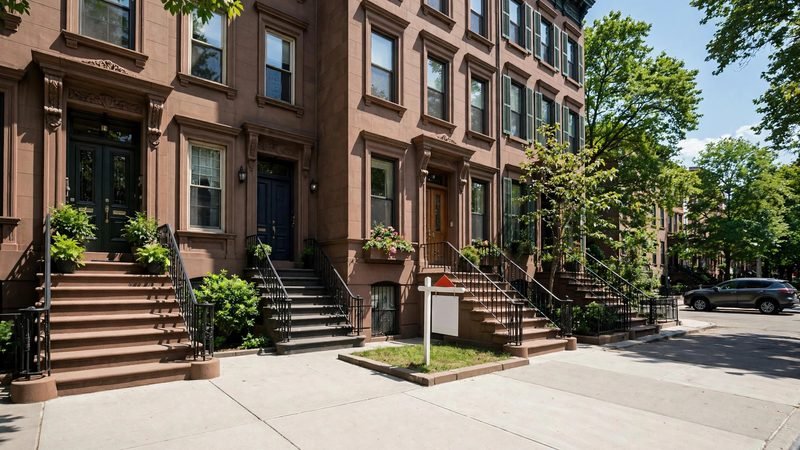
Yes. An open sidewalk violation does not legally block you from selling your NYC property, but it makes the deal harder. The violation is filed with the County Clerk, so it shows up in every title search. The buyer's lender or title company will require the repair handled before closing, fixed first or paid for through escrow.
Can you sell a house with an open sidewalk violation in NYC?
Legally, yes. There is no city rule that stops a property from changing hands while a sidewalk violation is open. DOT itself notes that a violation "may complicate selling or refinancing a property," which is the careful official way of saying the problem shows up exactly where transactions are most sensitive (nyc.gov/sidewalks).
The practical reality is different from the legal one. A copy of every sidewalk violation notice is filed with the County Clerk and stays on file until the Clerk receives official notice from the city that repairs were made (nyc.gov/sidewalks). So the buyer's title search will find it. Once found, the buyer's attorney and lender will want it handled before the money moves. There is no fine attached to the violation itself, so the exposure is the repair cost and whatever risk an unrepaired defect carries, not a penalty clock ticking against the sale.
If the city already stepped in and repaired the sidewalk because the 75-day window lapsed, the situation is more serious. After the Department of Finance bills you and 90 days pass unpaid, interest accrues and a monetary lien is placed against the property (nyc.gov/sidewalks). A lien sits on the title as a recorded debt. Buyers and lenders require recorded liens to be cleared before closing, and the satisfaction has to be recorded back at the City Register before the record reads clean, which can take weeks.
How does a sidewalk violation show up at closing?
The title company runs the search and flags two different things: an open DOT violation (the County Clerk filing, which says the defect still needs fixing) and a monetary lien (a recorded debt, which exists only if the city did the work and was never paid). Either one can hold up a deal, but they are resolved differently.
For an open violation, the buyer typically agrees to close only if the repair happens first or money is set aside for it. For a monetary lien, the debt has to be paid in full to the Department of Finance, the violation dismissed after a DOT inspection, and the satisfaction recorded. Fixing the sidewalk alone does not make the lien disappear from the record; the recording step is what actually clears the title. The distinction between what a DOT violation is and how it gets cleared and what a recorded lien needs is worth understanding before you talk numbers with the other side.
Is an escrow holdback normal for a sidewalk repair?
Yes, and it is one of the most common ways these deals get done. On the Brownstoner forum, a Brooklyn owner who bought with an open violation wrote that "when I bought the place, I had to have money in escrow to have it fixed" (Brownstoner thread). If your closing is structured this way, you are not doing anything unusual.
Here is how it normally works. A portion of the sale proceeds, or extra money from the buyer, is held by the title company or the closing attorney after closing. The written agreement sets the amount, usually the repair quote plus a cushion, and the exact condition for release, such as the repair passing the DOT dismissal inspection. The money releases only when that condition is met. If the repair never happens, the agreement spells out where the money goes.
A seller credit is the simpler alternative: reduce the price by the cost of the repair and let the buyer handle it after closing. It avoids the escrow paperwork but gives up the certainty that the violation actually gets cleared, which matters to the buyer more than to you. Some buyers also prefer the escrow route because the price stays intact for appraisal purposes. Whichever path you take, get two or three contractor quotes before the numbers are set so the holdback reflects typical sidewalk repair costs in NYC, not a guess.
Can you refinance with an open violation?
The official line from DOT is that a violation "may complicate" refinancing (nyc.gov/sidewalks), which tells you the city knows it happens and the outcome depends on the lender. In practice, a bare open notice is less severe than a recorded lien, and owner experiences vary. In the same Brownstoner thread, one replying owner said an open violation was no issue for their refi, while the original poster worried the title company would take issue with it (Brownstoner thread). Both things can be true with different lenders.
What lenders actually care about is risk they can measure. An unpaid city repair bill with a lien on the property is a concrete debt that sits ahead of the mortgage in line, so it gets flagged almost every time. An open notice with no debt attached is a repair obligation without a dollar figure on the record, so some lenders waive it through and others ask for it to be cleared or escrowed. The safest move is to call your lender or mortgage broker before you lock a rate and ask exactly how they treat an open sidewalk violation, then decide whether to fix it first or let them hold an escrow.
How do you clear a decades-old inherited violation quickly?
A real case from the community file: an owner in a Facebook group bought a property in 2007 and discovered a sidewalk violation dating back to 1998. This is more common than people think, and the age of the violation changes how you approach it.
First, understand that the violation attaches to the property, not to whoever owned it when the notice went out. As the current owner, you are the one who has to clear it, even if a previous owner caused the delay. DOT also notes that if a property received multiple notices over the years, the newest one supersedes the previous ones (nyc.gov/sidewalks), so the relevant question is always the current status, not the oldest paperwork.
Here is the fastest route:
1. Pull the current status. Request the violation status and a copy through NYC 311 with the violation number. You need to know whether the record shows it open, dismissed, or superseded before you spend a dollar.
2. Look at the sidewalk yourself. If the defect is genuinely gone (repaired years ago, hazard ground down, area redone), you may only need a dismissal inspection, not new construction. If it is still defective, you need a contractor and a permit.
3. Do not assume informal fixes count. One owner in the refi thread had workers grind down a trip hazard as a favor, with no permit, and wondered if it counted. Patchwork is itself a listed sidewalk defect on nyc.gov/sidewalks, so an unpermitted grind-down may not satisfy a DOT inspector. A dismissal inspection is the only thing that officially closes the record.
4. Request the dismissal inspection once the work is done. DOT's own repair guide lists this as the final step: complete the repair, then request the inspection (nyc.gov/sidewalks). Learn how dismissal inspections work so you book it at the right point.
5. Fix the ownership record if the violation names the wrong owner. Violations are sometimes issued to a prior owner because DOT's records are outdated. The 311 page for sidewalk violations says to mail a correction to the Department of Finance Correspondence Unit with proof (311: Sidewalk Violation and Repair).
If the damage was caused solely by a city tree on a one, two, or three family home, check whether the Trees and Sidewalks Program applies before you pay for anything, since the city handles qualifying cases (nyc.gov/sidewalks).
Should you repair before closing or offer a credit?
Both work, and the right choice depends on your timeline and the buyer's lender.
Repairing before closing costs less and gives you control. You pick the contractor, manage the 75-day repair clock if the notice is fresh, and hand over a clean record. The catch is timing: permits, contractor schedules, and the dismissal inspection all take calendar time, and a lien satisfaction recording can take weeks. If you are already under contract, you may not have the runway.
A seller credit or escrow holdback keeps the closing date intact but costs more in negotiation. Buyers will price in the uncertainty, and lenders may still demand their own conditions. When the violation is small and recent, fixing it yourself before listing is usually the cleaner play. When closing is weeks away, the escrow holdback is the realistic one.
A practical playbook for getting it cleared before the closing date
1. Check the violation status before you list. Run the address through a violation lookup and, if anything is open, request the official status through NYC 311. Knowing how to check a property before a transaction applies to sellers too, since the buyer's side will do exactly this.
2. Get repair quotes early. Two or three written quotes from licensed contractors give you the real number for negotiation and for sizing any escrow holdback.
3. Decide: repair, credit, or escrow. Fix it yourself if time allows. Offer a credit if the buyer prefers to control the work. Use an escrow holdback when the lender or buyer needs a guarantee.
4. Time the dismissal inspection against the closing. Schedule the repair so the dismissal inspection happens well before the closing date, and confirm the record actually updated. If a lien is involved, start the payment and satisfaction-recording process even earlier, because that recording window is outside your control.
5. Put everything in writing. The contract should state who pays, how much, what triggers release of escrow funds, and what happens if the work is not done. Verbal understandings about sidewalk repairs are where deals quietly fall apart.
You can check your property's current sidewalk violation status any time with the free lookup tool at /lookup. It reads public city records and is independent of DOT, so it is a fast way to see exactly what a buyer's title search will find.
FAQ
Can I sell my NYC house with an open sidewalk violation?
Yes. Nothing legally stops the sale. But the violation is filed with the County Clerk and will appear in the buyer's title search, so the lender or title company will usually require it repaired or escrowed before closing.
Does an open violation appear in a title search?
Yes. A copy of the violation notice is filed with the County Clerk and stays on file until the city confirms the repairs were made (nyc.gov/sidewalks). Any recorded monetary lien from city-done repairs appears as well.
Is it normal to leave repair money in escrow at closing?
Yes. Escrow holdbacks for agreed repairs are a standard closing practice, and owners report using them specifically for sidewalk violations (Brownstoner thread). The agreement sets the amount and the release condition, such as passing the DOT dismissal inspection.
Can I refinance with an open sidewalk violation?
Possibly. DOT says a violation may complicate refinancing, and owner experiences range from no issue at all to the lender requiring clearance or escrow (nyc.gov/sidewalks; Brownstoner thread). A recorded lien is the more serious version and is nearly always flagged.
Does repairing the sidewalk automatically remove a lien?
No. Repairing the sidewalk and getting the DOT violation dismissed are the repair steps. A monetary lien needs a separate satisfaction recorded with the City Register before the title reads clean, and that recording can take weeks.
I bought a property with a violation from decades ago. How do I clear it fast?
Pull the current status through NYC 311, since the newest notice supersedes older ones. If the sidewalk is already fixed, request a dismissal inspection. If not, hire a licensed contractor, pull the permit, complete the repair, and request the inspection. If the violation names a prior owner, send a correction to the Department of Finance per the 311 guidance.
Should I fix the sidewalk before listing, or offer the buyer a credit?
Fixing it before listing costs less and hands the buyer a clean record. A credit or escrow holdback keeps the closing date but usually costs you more in negotiation. If closing is only weeks away, the escrow holdback is the realistic option.