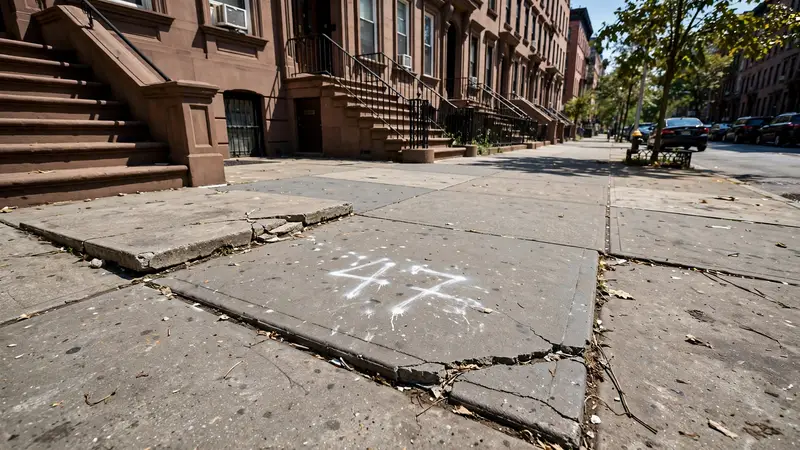
- When does the 75-day clock actually start?
- What does DOT do after the deadline passes?
- How does the Department of Finance bill work?
- What happens if you don't pay the bill within 90 days?
- Why does city-arranged repair cost more than hiring your own contractor?
- What should you do if you're already past the deadline?
- Frequently Asked Questions
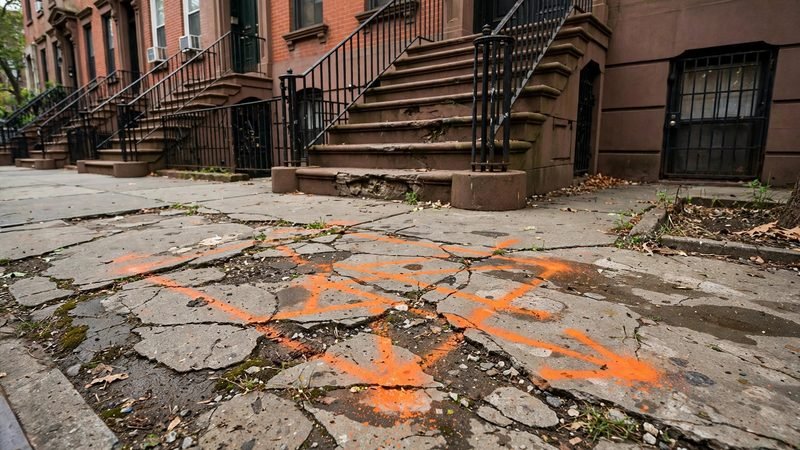
If you miss the 75-day deadline, NYC DOT can hire its own contractor to repair your sidewalk and bill you through the Department of Finance. You get a formal warning before work starts. If the bill goes unpaid for 90 days, interest accrues and a monetary lien is placed on your property.
When does the 75-day clock actually start?
The clock starts the day the Notice of Sidewalk Violation is received, as shown on the certified mail receipt. If the notice could not be delivered by mail and was posted on your property, the posting date starts the clock. The 75-day period runs the same way all year, and the notice carries a cost estimate and a diagram of the defective flags. For immediate hazards, DOT can shorten the window to 10 days. The full violation process, from inspection to dismissal, is covered in our DOT violations guide.
What does DOT do after the deadline passes?
Day 75 is the end of your window to control the repair. After that, NYC DOT may perform the sidewalk repair itself or hire a contractor to do the work, under Section 19-152 of the New York City Administrative Code. Here is how the city's enforcement machinery actually works, step by step:
1. You receive a formal notification. Before the city's contractor shows up, the property owner gets formal notice that the city is taking over the repair. This is your last signal that control has shifted.
2. The city documents the sidewalk. A consultant or representative of the city photographs the sidewalk to record its condition before construction, then marks the flags that must be replaced. You do not pick the scope; the marked flags are what gets fixed.
3. The city's contractor does the work. The contractor repairs every marked defect to DOT standard. The DOT Sidewalks page notes that the contractor's work is guaranteed for 18 months from the end of the contract period.
4. The violation is cleared from the records. After all defects are repaired, DOT notifies the County Clerk's office to remove the violation from its records.
One point that surprises owners: the violation itself carries no fine. The penalty for missing the deadline is not a ticket; it is losing control of the repair and receiving a bill for work you did not price.
How does the Department of Finance bill work?
Once the city finishes the work, the Department of Finance sends you the bill. The law requires the city collector to mail a notice of account, stating the amount due and the nature of the charge, within five days of recording it, to your last known address (or to the premises if no owner name is on record). That mailing is the official notification, so "I never saw the bill" does not stop the clock.
The bill has two parts:
- The repair cost. DOT explains how to estimate it: multiply the square footage on your Preliminary Inspection Report by the cost per square foot printed in the letter that came with your violation notice. Use the seven-inch concrete rate for driveway areas and the four-inch rate everywhere else. DOT warns that the final bill can be higher than this estimate because it reflects any additional repairs needed to bring the whole sidewalk up to standard. One small break is possible: flags marked with an "X" on the inspection sketch may be replaced at no charge, but that decision is made on site by a Department of Design and Construction engineer.
- Administrative expenses. Under Section 19-152, the city can add administrative expenses of up to 20 percent of the cost of the work. This is not a penalty added because you were late; it is the legally allowed overhead the city tacks onto city-performed repairs.
What happens if you don't pay the bill within 90 days?
The bill comes with its own clock. DOT states it plainly: the property owner has 90 days to pay the bill before interest is added. After 90 days without payment, interest accrues and a monetary lien is placed against the property.
The sequence matters, so here it is in order:
1. Day 1 of the bill: the notice of account is entered and mailed. Your 90-day payment window is running.
2. If unpaid at 90 days: interest starts accruing from the date the charge was entered, at the interest rate the city applies to real property tax charges. It grows until you pay.
3. A monetary lien is placed on the property. Under the law, this debt becomes a lien once the city collector records it, and it takes priority over nearly every other claim on the property except taxes. It sits ahead of your mortgage.
A lien like this tends to surface at the worst moment. DOT itself notes that an unresolved violation can complicate selling or refinancing, and an actual recorded lien is worse: title companies flag it, lenders treat it as a closing blocker, and the property cannot cleanly change hands until the debt, plus interest, is paid in full.
Why does city-arranged repair cost more than hiring your own contractor?
DOT does not publish a comparison chart, and any site that quotes an exact multiple is guessing. But the reasons city work lands higher are structural, not mysterious:
- You lose competitive pricing. When you hire your own contractor, you get multiple quotes and negotiate. The city's contractor works at the city's contract rates, and you have no seat at that table.
- You lose scope control. A private contractor prices what you agree on. The city's crew is sent to fix every flagged defect to full DOT standard, and the final bill can exceed the estimate from your violation letter.
- The 20 percent administrative expense is automatic. A private job has its own overhead baked into the quote. On a city job, up to 20 percent in administrative expenses is added on top of the work cost by law.
- The payment terms are rigid. A private contractor may work with you on scheduling and payment. The city bill arrives after the work is done, with a 90-day window, then interest and a lien.
For a sense of what private sidewalk work normally runs, see our guide to sidewalk repair costs in NYC. The price gap is the real cost of the deadline, which is why the weeks before day 75 are the cheapest time to act.
What should you do if you're already past the deadline?
First, do not assume the worst has already happened. City repairs are scheduled in batches, and there is often a gap between the deadline expiring and the city's contractor arriving. What you do now depends on where you are in the sequence.
1. Check your violation status right now. Use our free violation lookup tool, which reads public city data (it is independent and not affiliated with NYC DOT or any city agency), to see whether the violation is still open and whether any city repair has been scheduled. Knowing the status tells you which of the steps below apply.
2. If the city has not started work, fix it yourself immediately. Getting the repair done by a licensed sidewalk contractor before DOT's contractor is dispatched is the fastest way to stop the city's enforcement machinery. Every day you wait, the chance grows that the city assigns the job and the bill becomes unavoidable.
3. If the city already did the work, pay the bill before day 90. The single most expensive mistake now is letting the 90-day payment window expire. Paying the bill stops interest from accruing and prevents the lien. If you cannot pay in full, ask about a payment plan: DOT says you can request one at a Department of Finance Business Center or through 311 by selecting Sidewalk Repair Payment Plan.
4. If the bill or the work looks wrong, contest it. The law gives you a complaint and appeal process, including the right to challenge the amount due or the quality of the work by filing a notice of claim with the City Comptroller's office. Keep your notice of account, the inspection report, and photos of the finished work.
5. Confirm the violation is actually gone. After city repairs, DOT notifies the County Clerk to remove the violation. Verify that the dismissal landed on your property record, and if a lien was placed, confirm its release after payment. Our walkthrough on confirming a sidewalk violation dismissal covers exactly what to check.
Frequently Asked Questions
Does the 75-day clock start when the notice is mailed or when I receive it?
When you receive it. DOT counts the 75 days from receipt, as shown on the certified mail receipt. If the notice was posted on the property instead of mailed, the posting date is the start.
Can I still hire my own contractor after day 75?
Possibly, but the window is closing. If the city has not yet assigned a contractor or started work, completing the repair yourself now is the best move. Once DOT dispatches its contractor, you lose control of the scope, timing, and cost.
Is there a fine for missing the 75-day deadline?
No. A Notice of Sidewalk Violation carries no fine, and missing the deadline does not create one. The cost of missing it is the repair bill itself, plus up to 20 percent in administrative expenses, plus interest and a lien if the bill goes unpaid.
How much will the city's bill be?
It depends on your sidewalk. Multiply the square footage on your Preliminary Inspection Report by the per-square-foot concrete rate in your violation letter, then add up to 20 percent in administrative expenses. The final bill can exceed that estimate if extra work was needed. DOT notes the rates are subject to change.
Can I dispute the city's bill?
Yes. The law provides a complaint and appeal process, and you can challenge the amount charged or the quality of the work by filing a notice of claim with the City Comptroller. Act promptly; deadlines and procedures are spelled out in the notice of account you receive.
Will a sidewalk lien stop me from selling my home?
It can. A recorded lien is a legal claim against the property that takes priority over almost every other lien except taxes. Title searches will find it, lenders will flag it, and sales or refinances generally cannot close until it is paid off.
Is there a payment plan for the city's repair bill?
Yes. DOT states that owners can request a payment plan for a city-performed sidewalk repair at a Department of Finance Business Center or by contacting 311 and selecting the Sidewalk Repair Payment Plan option.
How long until the violation is cleared from my records?
After the city completes the repairs, DOT notifies the County Clerk's office to remove the violation. If a lien was placed, it is released separately once the debt is paid. Verify both on the public record rather than assuming they cleared automatically.
Missing the deadline is costly, but it is not the end of the story. The worst outcomes, interest piling up and a lien on your property, only happen if the bill goes unpaid for 90 days. Check your status today, and if the city's contractor has not arrived yet, getting the work done yourself is still the cheapest exit.