- What is an NYC DOT sidewalk violation?
- How DOT issues sidewalk violations
- The 75-day rule: what happens after you get one
- How to check an NYC DOT sidewalk violation by address
- How to clear an NYC DOT sidewalk violation
- DOT violation vs. sidewalk lien: don't confuse the two
- Frequently asked questions
- The bottom line
If you've received an NYC DOT sidewalk violation, or found one on a property's record, this guide explains what the notice means, the 75-day repair deadline, and the steps to clear it.
What is an NYC DOT sidewalk violation?
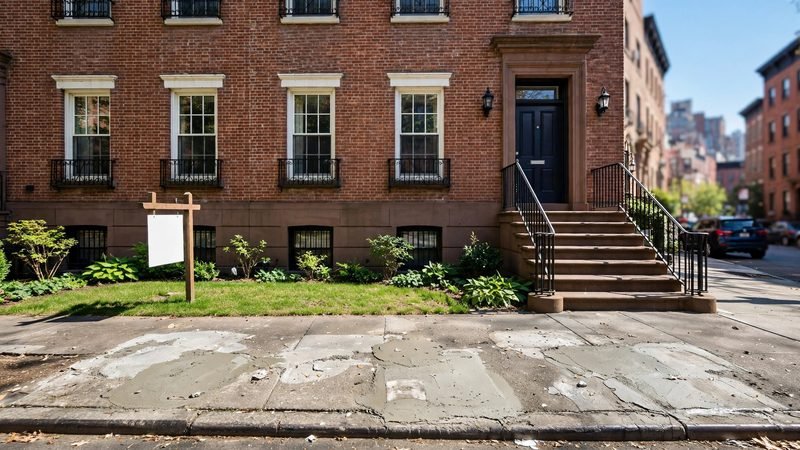
An NYC DOT sidewalk violation is a formal Notice of Sidewalk Violation issued by the New York City Department of Transportation. It means a DOT inspector found a defect in the sidewalk next to your property (cracked, raised, sunken, or uneven flags, an improper slope, a protruding utility cover, or a similar trip hazard), and the city is putting you on notice to fix it.
A few things people get wrong about it:
- It's not a fine. No money is owed simply because the violation was issued. It's a repair order, not a ticket.
- It's not the city's job to fix. Under NYC Administrative Code Section 19-152, the property owner is responsible for installing, repairing, and maintaining the sidewalk adjoining the property. DOT inspects and orders; you repair.
- It goes on the record. The violation is filed with the County Clerk and stays associated with the property until DOT confirms the repair and dismisses it. That means it can surface in title searches and complicate a sale or refinance.
How DOT issues sidewalk violations
DOT inspectors survey sidewalks across the five boroughs, sometimes on a schedule and sometimes in response to a 311 complaint about a broken or dangerous sidewalk. When an inspector finds a qualifying defect, the property owner receives the Notice of Sidewalk Violation, which lists each defect found and its location.
If you want the full picture of what inspectors look for and how the visit works, see our guide on how NYC sidewalk inspections work.
The 75-day rule: what happens after you get one
Once you receive the notice, the clock starts. Under Section 19-152, you generally have 75 days to complete the repair.
If you don't repair within that window, DOT can step in, hire its own contractor to do the work, and bill you for it through the Department of Finance. That bill is where things get expensive: if it goes unpaid, interest accrues and the city can file it as a monetary lien against the property. For the full breakdown of that path, read what to do after receiving an NYC sidewalk violation.
The practical takeaway: the 75 days are a grace period, not a suggestion. Starting the repair early is always cheaper than letting the city do it for you.
How to check an NYC DOT sidewalk violation by address
You don't have to wait for a notice in the mail to find out where you stand. You can check a property's sidewalk violation status by address through nycsidewalkviolationlookup.com. The lookup pulls from the city's Sidewalk Management Database and updates daily. For a step-by-step walkthrough, see how to check a NYC sidewalk violation by address.
Checking first matters because violations are sometimes issued without the owner realizing, for example after a complaint-driven inspection while you were away.
How to clear an NYC DOT sidewalk violation
Clearing a violation takes three steps:
- Repair every defect listed in the notice, under a valid DOT Sidewalk Construction Permit. The permit currently costs $70 per 300 linear feet of sidewalk for one property, and that fee covers the eventual dismissal inspection. Use a contractor who knows DOT specifications. The repair has to pass inspection, not just look fixed.
- Request a dismissal inspection through 311 once the work is complete. Keep your violation number, permit number, block and lot, and photos of the finished work together.
- Confirm the dismissal. Don't assume the record updated itself. Check the violation status again after the inspection and make sure the property record reflects the change, especially if a sale or refinance is in progress.
DOT violation vs. sidewalk lien: don't confuse the two
A DOT sidewalk violation and a sidewalk lien are related but different:
- A violation is the repair order on the property record. Clear it with a permitted repair and a passed dismissal inspection.
- A lien is a monetary charge, usually from City-performed repair work that went unpaid, filed as a debt against the property.
You can have one without the other, or both at once. If your title search shows a lien rather than (or in addition to) a violation, the process and timelines are different. See how long it actually takes to remove an NYC sidewalk lien.
Frequently asked questions
Is an NYC DOT sidewalk violation a fine? No. It's a notice ordering you to repair the sidewalk. Money only enters the picture if you ignore it and the city does the work and bills you.
How long do I have to fix a DOT sidewalk violation? Generally 75 days from when the notice is issued, under Section 19-152.
Can I sell a property with an open DOT sidewalk violation? You can try, but it will show up in title searches and many buyers' lenders require it cleared before closing. Start the repair and dismissal process as early as possible.
Where do I check whether a violation is still active? Run the address through nycsidewalkviolationlookup.com to see the property's current recorded sidewalk status.
The bottom line
An NYC DOT sidewalk violation is the city's formal notice that the sidewalk is your responsibility to fix, with a 75-day clock attached. Repair it under permit, get the dismissal inspection, and confirm the record is clear. Handled promptly, it's a routine repair job; ignored, it becomes a city bill, interest, and potentially a lien.