- The Core Principle: Ownership Is Public, Responsibility Is Private
- When the City Steps In, and What It Costs
- The Tree-Related Exception
- Rental and Commercial Properties: Full Responsibility
- Condominiums and Co-ops: Shared Duty, Centralized Accountability
- Tenants: Who Is on the Hook?
- City-Owned Frontage: Agency Responsibility
- Corner Properties: Double the Frontage, Double the Exposure
- Tree Damage: Ownership of the Tree Isn't the Deciding Factor
- The Bottom Line
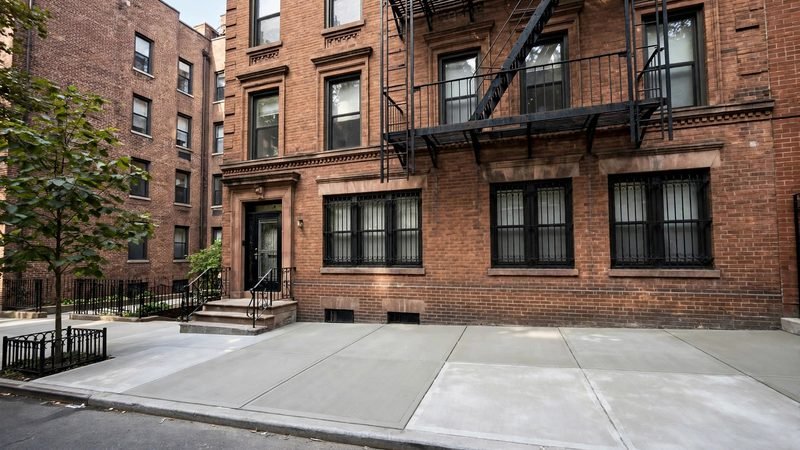
The short answer: the city owns the sidewalk, but you maintain it. For most New York City property owners, the pavement in front of the building is a legal obligation as much as a physical asset.
The Core Principle: Ownership Is Public, Responsibility Is Private
Many property owners assume that municipal infrastructure is a municipal problem. In New York City, the law says otherwise. The owner of the adjoining property is responsible for maintaining and repairing the sidewalk in front of it, and a cracked, lifted, or otherwise hazardous slab in front of your building is yours to fix.
The rationale is practical. Uneven pavement is a leading cause of trips and falls, and those incidents can escalate quickly into injury claims and litigation. Under Section 7-210 of the Administrative Code, owners are potentially liable for personal injuries caused by a failure to keep the sidewalk free of defects. Separately, §19-152 is the provision under which the city repairs a neglected sidewalk and bills the owner. In effect, the city holds the title while the owner carries the risk.
When the City Steps In, and What It Costs
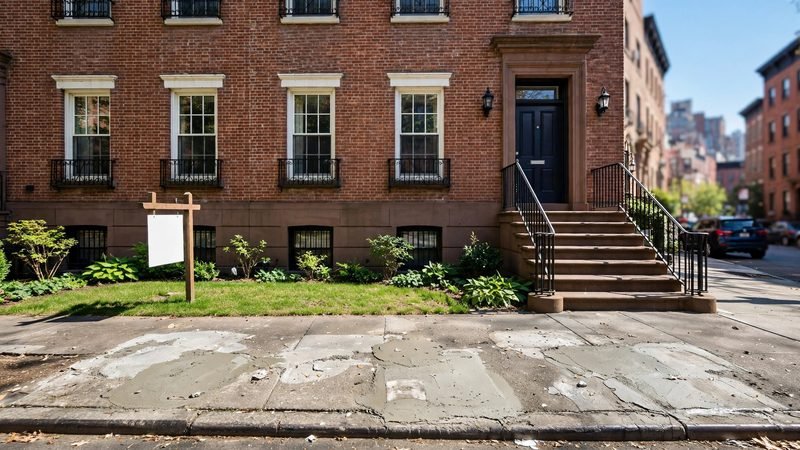
The city does perform sidewalk repairs, but only in limited circumstances: when an owner fails to act after receiving a violation notice, or when a sidewalk presents an emergency hazard. In those cases the city completes the work and bills the owner through the Department of Finance. City-billed work is generally more expensive than hiring a private contractor yourself.
The Tree-Related Exception
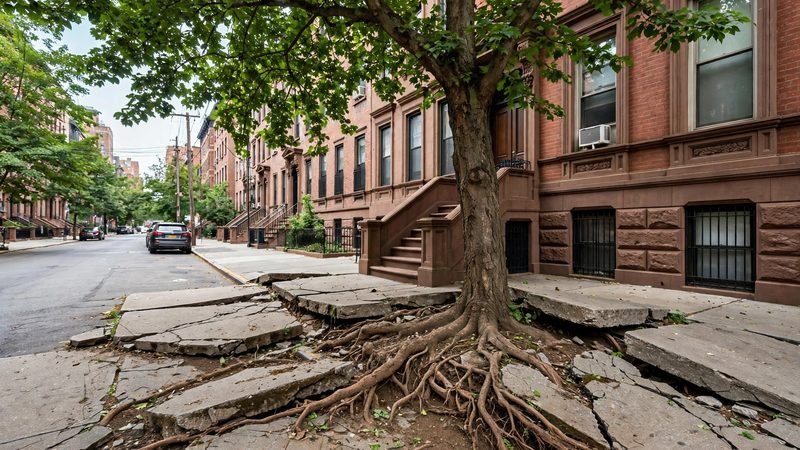
There is one meaningful carve-out. Through NYC Parks' Trees & Sidewalks Program, owners of one-, two-, or three-family homes can receive free repairs when the damage was caused by the roots of a city-owned tree. The program recognizes that homeowners have little control over mature street trees that lift and fracture pavement. The city has also stopped issuing sidewalk violations and liens to one- to three-family properties where City trees are the sole cause of the damage. For the full picture, see how much sidewalk damage New York City is responsible for.
The program has clear boundaries:
- Cause matters. Damage from age, water infiltration, or settling is not covered, and the owner bears the cost.
- Occupancy affects eligibility. Parks limits the program to owner-occupied homes not used for commercial purposes, so renting out any portion of the home may disqualify you.
- Timing. Parks inspects a site only once every three years, and approved repairs can take time. Owners who can't wait may repair the sidewalk themselves with a free Parks permit.
- How to apply. Eligibility checks and repair requests go through 311 or the NYC Parks Department website.
Rental and Commercial Properties: Full Responsibility
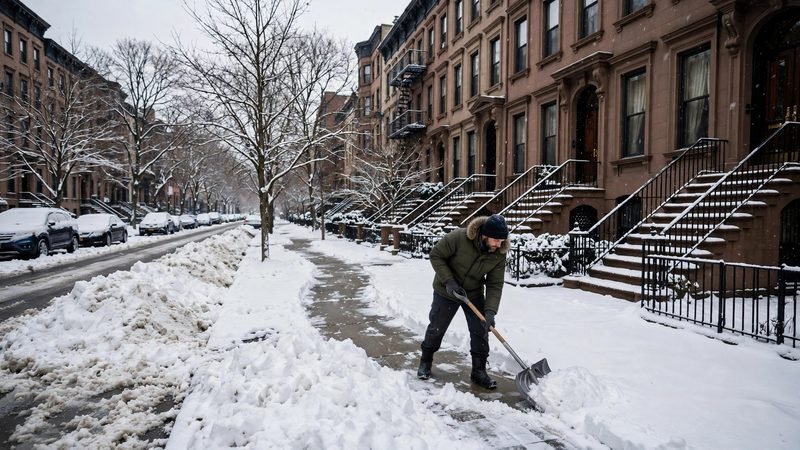
Owners of multi-family rental buildings, apartment complexes, and commercial properties carry the full burden. That includes filling cracks and holes, replacing uneven or raised slabs, and keeping the sidewalk free of snow, ice, and debris.
The NYC Department of Transportation (DOT) inspects sidewalks across the five boroughs and issues a Notice of Sidewalk Violation when it finds an unsafe condition. Once the notice is received, the owner has 75 days to complete the repairs, and a sidewalk permit does not extend that window. If the deadline passes, DOT may hire its own contractor and the Department of Finance bills the owner. Owners then have 90 days to pay before interest accrues, and unpaid charges can become a lien that complicates refinancing, sales, and cash flow.
The financial logic favors early action. Addressing minor deterioration promptly is almost always cheaper than absorbing a violation, a city-billed repair, or an injury claim.
Condominiums and Co-ops: Shared Duty, Centralized Accountability
In shared-ownership buildings, the obligation shifts from individual unit owners to the governing body. In a condominium, sidewalk upkeep generally falls to the condo association. In a co-op, the board manages all common areas, including sidewalks, funded by monthly maintenance fees or a one-time assessment for major work.
Either board is expected to:
- Keep the sidewalk in reasonably safe condition.
- Repair or replace broken sidewalk flags.
- Clear snow and ice in winter.
- Carry liability insurance to cover injuries linked to unsafe sidewalk conditions.
Boards may delegate the work to a contractor, superintendent, or property manager, but delegation does not transfer liability. If someone is injured because of poor maintenance, the building can still be held responsible.
Tenants: Who Is on the Hook?
For most residential tenants in New York City, sidewalk repair is not their concern. The responsibility belongs to the landlord, who is almost always accountable for significant repair work.
Commercial tenants face a different picture. Many commercial leases include a sidewalk maintenance clause requiring the tenant to keep the area clean and clear, remove snow and debris, and fix minor damage caused by their own operations, such as cracks from heavy equipment or deliveries. Before signing, review the lease carefully or ask the landlord to clarify the terms.
City-Owned Frontage: Agency Responsibility
Where a sidewalk borders city-owned property, the agency that controls the property is responsible for it:
| Adjacent property | Responsible agency |
|---|---|
| City parks and green spaces | NYC Parks Department |
| Public schools | NYC Department of Education |
| Public housing developments | NYCHA |
| Subway entrances and bridges | MTA or DOT |
If the cracked pavement you are looking at runs alongside a city park, for example, the Parks Department is the party responsible for repairing it.
Corner Properties: Double the Frontage, Double the Exposure
Owners of corner lots are responsible for the sidewalk along both the main street and the cross street. That means twice the area to inspect and maintain, and the potential for two separate violations if either side is neglected. Repairs along both frontages may also require multiple permits; DOT charges $70 per 300 linear feet of sidewalk for a repair permit on any one property. Corner owners should make regular inspection of both walkways a routine part of property management.
Tree Damage: Ownership of the Tree Isn't the Deciding Factor
Tree roots are among the most common causes of sidewalk damage in the city. They lift slabs, create hazardous ridges, and can eventually fracture the concrete. Who pays depends on the property type:
- City-owned tree + owner-occupied one-, two-, or three-family home: the city will likely handle the repair at no cost to you, and no violation or lien should be issued for damage caused solely by City trees.
- City-owned tree + commercial property, rental, condo, or co-op: the repair is your responsibility, even though the tree belongs to the city.
If you are unsure who owns a tree, call 311 to confirm ownership or request an inspection. Never cut or remove a city-owned tree yourself; the fines can be substantial. For work near roots, Parks offers free consultations and permits.
The Bottom Line
Although the city technically owns New York's sidewalks, maintaining them is almost always the property owner's job. Meeting that obligation is about more than compliance. It keeps neighborhoods safe and accessible for everyone who walks through them. Regular inspections, timely repairs, and a working knowledge of the rules help owners avoid violations, tax liens, and liability exposure.
If you're unsure about the status of the sidewalk in front of your property, you can check any NYC address for violations.