Yes. New York City can fine property owners for debris like leaves, grass clippings, or twigs left on the sidewalk or in the gutter. Under Administrative Code Section 16-118, you are responsible for keeping your sidewalk clean and clearing 18 inches of street past the curb. These violations are issued by DSNY, not DOT, and they are heard at OATH.
What Does the 18-Inch Rule Actually Say?
The rule comes from Section 16-118(2)(a) of the NYC Administrative Code. In plain English, every owner, lessee, tenant, occupant, or person in charge of a building or premises must keep the sidewalk, flagging, and curbstone abutting their property free of garbage, refuse, rubbish, litter, debris, and other offensive material. They must also clear the same material from the strip between the curb and the roadway area extending one and one-half feet into the street. One and one-half feet is 18 inches.
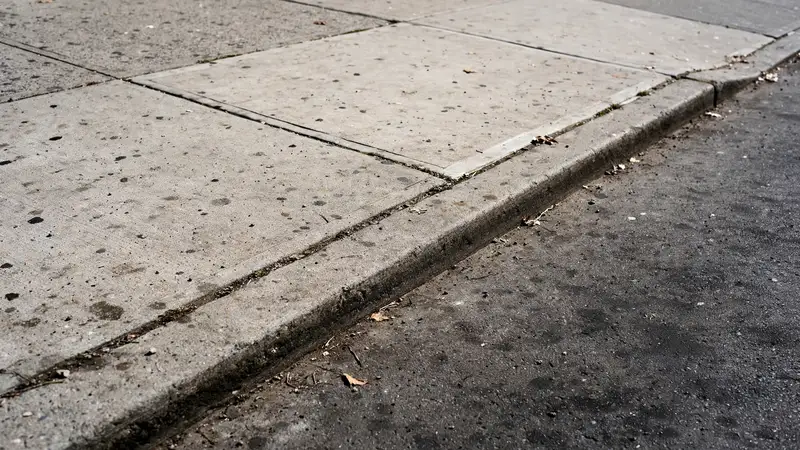
The second part is the piece most people miss. Your duty does not stop at the curb. It reaches 18 inches into the street, which is the gutter zone where leaves, litter, and sweepings collect. The Department of Sanitation puts it plainly: property owners must clean the sidewalk and the gutter area (18 inches from the curb into the street) along the building perimeter.
There is one exception written into the law. You are not responsible for cleaning debris that accumulates at catch basins (the storm drains in the street) within that 18-inch zone, even if those drains sit inside your stretch of curb. The law says so directly in Section 16-118(2)(a).
Can You Really Get Ticketed for Leaves or Twigs?
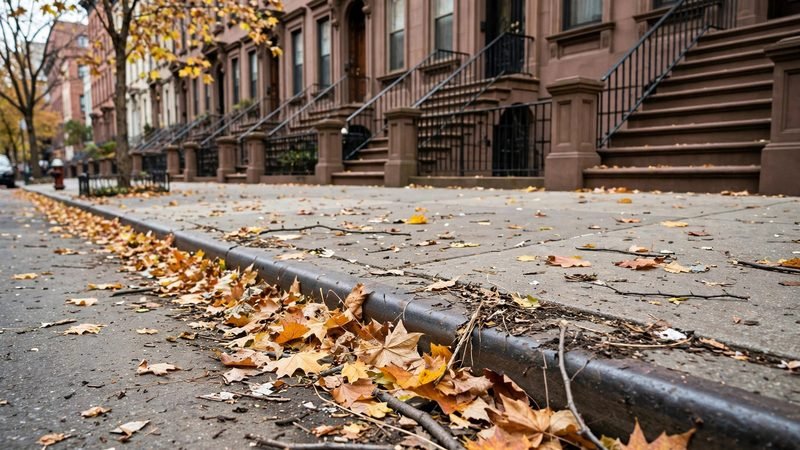
Yes, and it happens most often in spring and fall. When yard work leaves grass clippings or twigs scattered along the curb, or autumn leaves pile up in the gutter, DSNY can cite you for a dirty sidewalk or failure to clean 18 inches into the street. This is the scenario that produces tickets every yard-work season: a landlord has the lawn trimmed, the crew leaves clippings and twigs scattered along the curb, and the owner gets the summons. The duty sits with the owner or person in charge of the premises, not with whoever made the mess. The code does not exempt debris that blew in, fell from a street tree, or was left by someone else.
Landscapers have their own obligations on top of this. NYC 311 states that landscapers who dispose of yard waste improperly face fines of $250 for a first violation, $1,000 for a second violation within 12 months, and $2,500 for the third and following violations.
One common mistake makes things worse. Sweeping yard waste or dirt into the street does not count as cleaning. Section 16-118(1)(a) separately bars anyone from littering, sweeping, throwing, or casting rubbish into any street or public place, and DSNY says litter and sweepings must be picked up and placed in bins with secure lids for collection. Sweep it up, do not sweep it out.
How Are These Summonses Issued?
These summonses come from the Department of Sanitation (DSNY), and they are written by DSNY enforcement agents. DSNY says dirty-sidewalk and gutter tickets can only be issued during specified enforcement windows. At residential properties, enforcement runs two one-hour windows, seven days a week: 8:00 AM to 9:00 AM and 6:00 PM to 7:00 PM. Agents may issue tickets for other sanitation violations at any time, but dirty-sidewalk and gutter tickets are limited to those windows. For commercial properties, enforcement routing times vary by address, and businesses are expected to keep the sidewalk and gutter area clean at the beginning and end of each day. All of this is laid out on DSNY's Sidewalks and Gutters page.
How Much Is the Penalty?
The official penalty schedule in Section 16-118 sets the civil penalty for a dirty-sidewalk violation at $50 for a first violation, $100 for a second violation within any 12-month period, and $100 for a third or subsequent violation within a 12-month period. Commercial and industrial buildings (anything not solely residential) face higher repeat penalties: $50 for the first violation, $300 for the second violation on a different day within 12 months, and $500 for the third and each subsequent violation, under Local Law 67 of 2024. DSNY's own cleaning page states that residential violators may be fined up to $100.
Ignoring the summons costs more. If you do not answer in the time allowed, the city can enter a default against you and impose additional penalties of up to $450 per violation. OATH says the same: miss the hearing date without responding and you will be found in violation by default, and a higher fine may be imposed.
How Do You Fight a Sanitation Summons?
Every DSNY summons lists a hearing date and is returnable to the Office of Administrative Trials and Hearings (OATH), the city's independent tribunal, not to DSNY. OATH lays out your options. You may admit the charge and pay the penalty listed on the summons before the hearing date. You may request to reschedule the hearing one time. Or you may fight the summons through a hearing by phone, a hearing in person, an online hearing, or a hearing by mail. Phone hearings must be requested at least three business days before the hearing date, in-person hearings at least five business days ahead, and online or mail defenses must reach OATH before the hearing date. Hearings are informal, and you do not need an attorney.
Whether to pay or fight is your call, but a few practical factors are worth weighing. The evidence matters most. The summons has to support the charge, so many respondents gather dated photos of the area as it looked around the time the ticket was written. Defenses sometimes turn on facts the code itself sets, such as the catch-basin exception or whether the notice was delivered properly. Time matters too: fighting takes a scheduled hearing, while admitting and paying closes the case by the date on the summons. And the repeat schedule matters: a second violation within 12 months costs more than the first, so owners who clean up and keep a routine avoid the escalating fines.
How Is This Different From a DOT Sidewalk Violation?
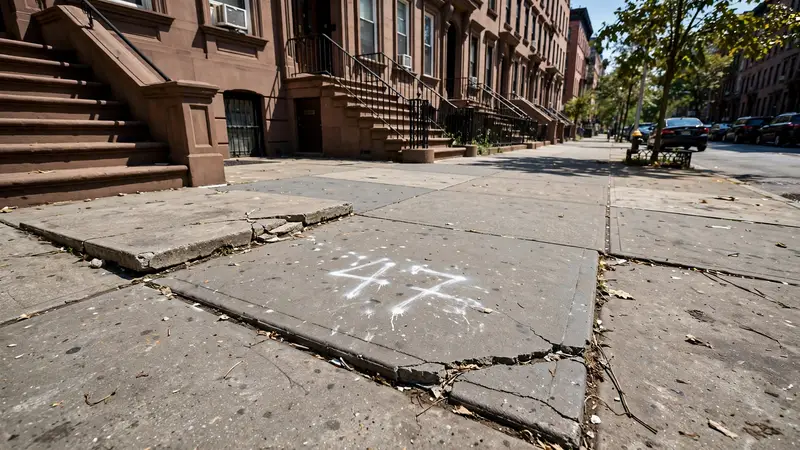
This is the mix-up worth clearing up early. A DSNY sanitation summons is about dirt and debris on and near the sidewalk, issued by Sanitation under Section 16-118. A DOT violation notice is about the physical condition of the sidewalk itself: cracked, raised, or missing concrete flags. Those notices are issued by the Department of Transportation under a different law, Section 19-152, and they require you to repair the concrete. One is a cleaning duty, the other is a repair duty. Different agency, different law, different cure.
You can also run a free violation lookup to see city-issued violations tied to an address. It reads public city records and is independent of NYC DOT, DSNY, or any city agency.
Frequently Asked Questions
Am I responsible for the gutter even if I did not put the debris there?
Yes. The code puts the duty on the owner, lessee, tenant, occupant, or person in charge of the premises, and it makes no exception for how the debris got there. Leaves that blew in, litter someone else dropped, and clippings your landscaper left behind are all your responsibility to clear.
Does the 18-inch zone include the storm drain?
No. The law expressly says you are not responsible for cleaning debris that accumulates at catch basins within the 18-inch zone. You are still responsible for the gutter along the rest of your curb line.
When can DSNY ticket my residential property?
Dirty-sidewalk and gutter tickets at residential properties are issued only during two one-hour windows, seven days a week: 8:00 AM to 9:00 AM and 6:00 PM to 7:00 PM, according to DSNY. Tickets for other sanitation violations can be written at any time.
What happens if I ignore the summons?
OATH will find you in violation by default and may impose a higher fine. The Administrative Code allows additional penalties of up to $450 per violation when a summons goes unanswered. Responding on or before the hearing date avoids the default.
Can I just sweep everything into the street?
No. Section 16-118(1)(a) bars sweeping rubbish into any street or public place, and DSNY says sweepings must be picked up and placed in bins with secure lids. Sweeping debris into the street can produce its own violation on top of the dirty-sidewalk one.
Who pays if my landscaper left the mess?
You do, as the owner or person in charge of the premises. The landscaper faces separate fines for improper yard waste disposal (NYC 311), but that does not shift your duty to keep the sidewalk and gutter clean. Many owners make curb-area cleanup part of the agreement with their yard crew.
Is this the same as the violation that makes me repave the sidewalk?
No. A sanitation summons covers dirt and debris and is cured by cleaning. A DOT violation notice covers broken or defective concrete and is cured by repairing the sidewalk. If you are unsure which one you received, check the issuing agency and the code section printed on the notice.
The 18-inch rule surprises a lot of owners because the gutter feels like city property. For cleaning purposes, it is not. A broom, a dustpan, and a quick pass along the curb during the enforcement windows are usually all it takes to stay on the right side of DSNY.