- Why do landmark district sidewalks have different rules?
- Will the city pour concrete over my slate or bluestone slabs?
- What does the Landmarks Preservation Commission actually require?
- Do I have to pay for curb repairs too?
- Who fixes a sidewalk over a basement vault?
- What if tree roots lift a special-material sidewalk?
- Frequently asked questions
In most landmark districts you still pay for sidewalk repairs, but you may have to match the historic material instead of pouring plain concrete. The Landmarks Preservation Commission regulates paving where it is a significant streetscape feature. Curbs are a different story: DOT may fix missing or defective curbs at no cost during violation-related work or an active curb contract.
Why do landmark district sidewalks have different rules?
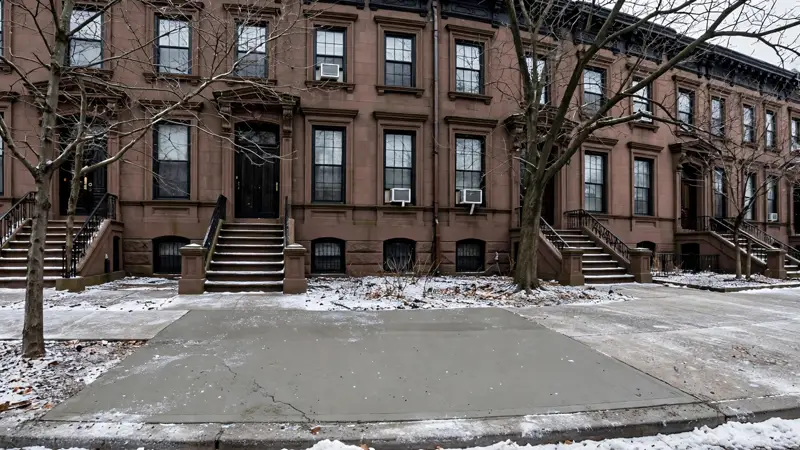
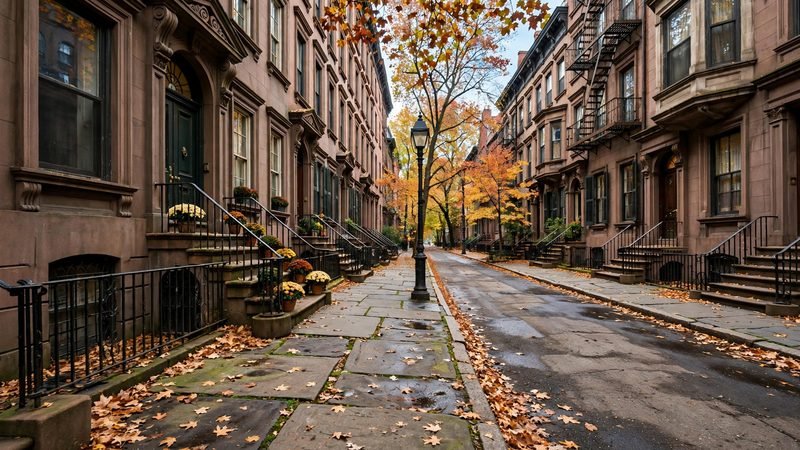
In a standard neighborhood, DOT wants plain concrete in a 5-by-5 scoring pattern. In some historic districts, the sidewalk itself is part of what makes the street look the way it does. The Landmarks Preservation Commission (LPC) says that in these districts, sidewalk paving materials and location are considered significant features, and protecting that uniform streetscape is the basis for its repair and replacement rules (LPC Permit Guidebook, Chapter 10: Sidewalks).
One point owners often miss: LPC does not regulate every sidewalk in every historic district. It only regulates paving replacement in districts where paving is considered a significant feature of the streetscape. The guidebook keeps a list of those districts, and in the rest, you do not need LPC approval for sidewalk work. If you are unsure which side you fall on, the LPC contact line is 212-669-7817 or info@lpc.nyc.gov, and applications are filed through its Portico portal.
Will the city pour concrete over my slate or bluestone slabs?
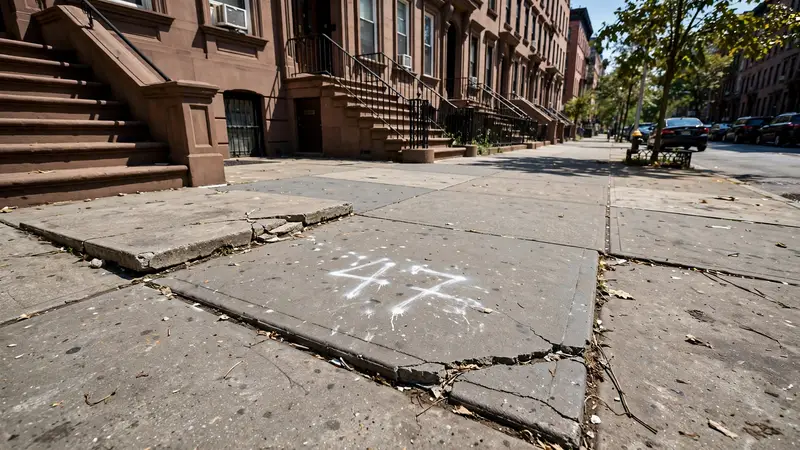
This is the question that keeps landmark-district owners up at night. On a Brownstoner forum, an owner in a landmarks district described their sidewalk as a mix of large and small slate slabs. Their appeal of a violation had been rejected, and they wondered whether the city would simply come in and pour concrete (Brownstoner forum thread).
The honest answer: DOT's own repair-cost letter prices city-performed work per square foot of concrete (four-inch or seven-inch, depending on the area), which tells you what its contractors are set up to pour. Another owner on the same thread put it bluntly from experience: in non-landmark districts the city replaces specialty stone with concrete, and in a landmark district you are required to replace the sidewalk in kind. That is a forum member's account, not an official policy, but it matches how the two agencies divide the job. DOT repairs defects; LPC protects the look.
So if keeping your slate, bluestone, or granite matters to you, waiting for the city to do the work is a gamble. The safer route is to hire a private contractor and handle the repair yourself within the 75-day repair clock. Note that a sidewalk permit does not extend those 75 days, so build the LPC review into your schedule from the start. For more on what happens when that deadline runs out, read what to do after receiving an NYC sidewalk violation.
What does the Landmarks Preservation Commission actually require?
For bluestone, which is the most documented case, the LPC rules are specific. Staff can approve removing heavily damaged or crushed pavers, but intact portions that meet DOT size requirements must be retained. Replacement pavers must match the existing or adjacent historic pavers in dimension, color, and paving pattern, and where feasible the original stone must be salvaged and reused on site.
The broader principle in the guidebook applies to any historic material: identify whether historic fabric remains, retain it where feasible, and make sure new paving is harmonious with the adjacent historic paving so the streetscape keeps its continuity. Your proposal also has to satisfy DOT, Parks, and sometimes the Public Design Commission (PDC) on top of LPC, so check all of them before work starts.
Two other details worth knowing:
- If your material is non-concrete, DOT treats it as a distinctive sidewalk. Additional reviews are required before you may begin construction or repair work. Outside the designated commercial districts, that means a Distinctive Sidewalk Maintenance Agreement with DOT plus PDC approval (NYC DOT sidewalks page).
- The pigmented concrete standard used in busy commercial districts does not apply to landmarked historic districts. They follow their own standards.
Do I have to pay for curb repairs too?
This one confuses people because the answer is split. DOT's official position: property owners are encouraged to repair or replace missing or defective curbs. But DOT may also repair or replace missing and defective curbs at no cost to the property owner when it is already doing sidewalk work related to a violation, or when there is an active curb repair contract in your area (NYC DOT sidewalks page).
In practice, that means two things. First, if you already have a violation and DOT crews are coming for the sidewalk anyway, ask about the curb. You may get it fixed free. Second, do not assume a damaged curb is always your bill. This came up on r/AskNYC, where an owner with a DOT violation got conflicting answers from contractors about whether a steel-reinforced curb was their responsibility or the city's. The official rule above is the deciding document, not the contractors' opinions. When quotes disagree, check the DOT page and call 311 before you sign anything.
For the general question of who covers what along the property line, see who pays for NYC sidewalk repairs.
Who fixes a sidewalk over a basement vault?
Some brownstones and commercial buildings extend below the sidewalk. If your sidewalk sits over a vault or another structure, DOT's rule is plain: the property owner must repair the sidewalk privately, and the city will not repair sidewalks over vaults or other structures (NYC DOT sidewalks page). Vault work can involve structural engineering, not just new flags, so this is firmly licensed-contractor territory. If your vault has cast iron vault lights or other historic features, the LPC guidebook has a section on them, so factor LPC into the plan as well.
What if tree roots lift a special-material sidewalk?
Tree damage follows the same rules regardless of material, and the summary is short. The city does not charge owners of one, two, or three family homes for repairing sidewalks damaged by a city tree or its roots, and it has stopped issuing violations to those properties for damage caused solely by city trees. One hard rule stands no matter the material: cutting or shaving the roots of city-owned trees is strictly prohibited (NYC DOT sidewalks page). For the full playbook on root damage, permits, and the Parks program, see who is responsible for sidewalk repairs in NYC.
If you own in a landmark district, it is worth knowing your violation status before any of this becomes urgent. Run the property address through the free lookup tool to check for open violations and inspection records. It reads public city data and is independent of DOT.
Frequently asked questions
Do I need LPC approval to repair my sidewalk in a historic district?
Only if your district is one where LPC considers paving a significant feature of the streetscape. The LPC Permit Guidebook keeps the list. If your district is on it, get LPC approval before work starts; if not, you still need the standard DOT sidewalk permit.
Can I replace my historic sidewalk with plain concrete to save money?
Not where LPC regulates the paving. The rule is to retain historic materials where feasible and match dimension, color, and pattern. Swapping bluestone for plain concrete in a regulated district would not meet the criteria.
If DOT repairs my sidewalk, will they preserve the historic material?
DOT prices its own repair work per square foot of concrete, which is what its contractors pour. If the historic material matters to you, do the repair privately with the correct material before the 75-day deadline passes.
Does the 75-day clock pause while I wait for LPC or DOT approval?
DOT states that a sidewalk permit does not extend the 75-day period to start repairs. Start the approval process as soon as you receive the notice so the review does not eat your whole window.
Who pays for curb repair in NYC?
Owners are encouraged to fix missing or defective curbs, but DOT may do it at no cost while performing violation-related sidewalk work or under an active curb repair contract. Check which situation applies before paying out of pocket.
Who repairs a sidewalk over a vault?
The property owner, privately. The city will not repair sidewalks over vaults or other structures.
What about tree-root damage to bluestone or slate?
For one, two, and three family homes, the city does not charge for repairs to sidewalks damaged by city trees, and it no longer issues violations for damage caused solely by city trees. Never cut or shave a city tree's roots; it is prohibited.